On Sunday, I was watching the reverends prepare for the communion, and I thought of my previous post. So this is sort of a continuation, but with a different theme.
Altars have been, for most of their history, places where humans sacrifice to gods. But in Christianity, we aren't offering anything to God on the altar. Instead, people are taking communion. There is food and wine, a typical offering, but we are eating it, not God. Furthermore, this is not simply bread and wine. It's flesh and blood. Jesus is the sacrifice; he is giving himself to us. In communion, we have both a food and drink sacrifice and a human sacrifice.
What great love does God have for us, that he has reversed the roles to offer his Son to us? That the people of God partake in the communion, eat the bread and wine blessed at the altar?
Jesus is giving to us, instead of people giving to him. That's one way to look at it. Like I said previously, what could we give God that he does not already have? Christianity answers this question. We give God what he gives us: Our lives. Our talents. Our gifts. God gives us these things, and we return them to him, devoting ourselves to Christ.
There was a short story I read once: "A Father's Story," by Andre Dubus. In it, the man comes to the reverend's house and says, "I want to receive." I realized on Sunday at least part of the significance of such a word. We receive Jesus.

Tuesday, January 22, 2013

Friday, January 18, 2013
Sacrifices and Altars
On Christmas Eve, kids and their parents bake chocolate chip cookies, pour a glass of milk, and set it near the fireplace in hopes that Santa will be able to have a snack while visiting their home. My family never did this. It might have been because my sister and I figured out that Santa wasn't real pretty early on, the little detectives that we often tried to be.
But when the kids go to bed, the parents sneak out, consume the milk and cookies, and drop the presents under the tree and in the stockings. Then the children wake up, and--oh, look! Santa ate the snack and left a thank-you note (at least, that's what my parents would have done. They were big on thank-you notes)!

If there weren't parents to eat the milk and cookies, though, the food would still be there. There has to be someone deceiving the kids in order for it all to work. I grew up applying this sort of idea to instances in historical fiction about sacrifices and altars. That is, I thought that the priests or others crept into the buildings in the middle of the night, and ate all the food so when the unknowing worshipers returned, it would be like the deity received their offering.
Except, I'm pretty sure now that such a thing often didn't happen.
I think most Christians tend to panic a bit when they think of other religions and those religions' sacrifices and altars. While the more traditional Christian churches have altars where communion is blessed and incense is poured over it, any actual sacrificing is seen as weird or disturbing. I'm speaking of leaving food, animals, etc. at altars for God/the gods.
But when the kids go to bed, the parents sneak out, consume the milk and cookies, and drop the presents under the tree and in the stockings. Then the children wake up, and--oh, look! Santa ate the snack and left a thank-you note (at least, that's what my parents would have done. They were big on thank-you notes)!

If there weren't parents to eat the milk and cookies, though, the food would still be there. There has to be someone deceiving the kids in order for it all to work. I grew up applying this sort of idea to instances in historical fiction about sacrifices and altars. That is, I thought that the priests or others crept into the buildings in the middle of the night, and ate all the food so when the unknowing worshipers returned, it would be like the deity received their offering.
Except, I'm pretty sure now that such a thing often didn't happen.
I think most Christians tend to panic a bit when they think of other religions and those religions' sacrifices and altars. While the more traditional Christian churches have altars where communion is blessed and incense is poured over it, any actual sacrificing is seen as weird or disturbing. I'm speaking of leaving food, animals, etc. at altars for God/the gods.
Sunday, January 13, 2013
Musings.
I can't remember hating myself this much since I was in seventh grade and dissolved into tears for a few hours because I hated how I looked with my glasses. This time is different, and the circumstances make more sense, but I can't get myself to cry. It's strange how, over the years, I've seen myself crying (not other people, just me, because I should know better) as a weakness. Now, when I want to, I can't. I've even tried prodding my eye, and there's no tears. It's weird how I can miss something I used to hate, and hate something I used to be proud of.
My consolation is that this too, shall pass. I just hope it's soon. And that I'm right.
My consolation is that this too, shall pass. I just hope it's soon. And that I'm right.
Wednesday, January 9, 2013
Stuff.
I haven't posted in a long time. That's not actually a problem for anyone but me, because no one reads my blog (I think?), but it bothers me a little, because one of the ways I think is by writing. When I do happen to be thinking without writing it down, I often don't remember everything. That's a problem, because I struggle with a lot of important topics that I don't want to forget.
Knowing this, however, hasn't really changed the way I act.
But guess what motivates me more than positive life changes? GRADES! So my Astronomy Lecture requires some devotional (what does that mean? no one will tell me what a devotional is!) journaling and just plain journaling. And I don't want to devote a notebook to it (paper and money and stuff). and I want to keep up a blog, so I figured, hey! Why not post journal blogs?
So my next posts are probably going to include Astronomy in some way. Just as a heads up.
Which I realize as I write is a little pointless, because no one reads my blog. Except maybe sometimes my older sister. So, hello Megan!
Knowing this, however, hasn't really changed the way I act.
But guess what motivates me more than positive life changes? GRADES! So my Astronomy Lecture requires some devotional (what does that mean? no one will tell me what a devotional is!) journaling and just plain journaling. And I don't want to devote a notebook to it (paper and money and stuff). and I want to keep up a blog, so I figured, hey! Why not post journal blogs?
So my next posts are probably going to include Astronomy in some way. Just as a heads up.
Which I realize as I write is a little pointless, because no one reads my blog. Except maybe sometimes my older sister. So, hello Megan!
Friday, November 2, 2012
Where the Dead People Go
Okay, so this isn't really a serious post, despite the title, but I'm writing it anyway:
We learned in class that in most biblical times, people had this concept of the universe as being 3-story. There was Earth, which was a disk; the heavens, which were a dome above it; and the underworld, where the dead people went. But as time went on, people discovered that this was a bad idea. Now we have the theory of the ever-expanding universe. The question is, where do the dead people go now? There's no under anymore.

My answer, dear friends, is this:
THEY LIVE ON THE OTHER PLANETS.
Not now, maybe. But when the dead are all resurrected. I mean, where are you going to stick all the human beings that have ever lived? You'd certainly have an overcrowded Earth. That's why the universe is ever-expanding. There are more and more people being born everyday. We don't have to worry about being one small speck in the universe--all those other places are our retirement homes!
.... But in all seriousness, I don't know.
We learned in class that in most biblical times, people had this concept of the universe as being 3-story. There was Earth, which was a disk; the heavens, which were a dome above it; and the underworld, where the dead people went. But as time went on, people discovered that this was a bad idea. Now we have the theory of the ever-expanding universe. The question is, where do the dead people go now? There's no under anymore.

My answer, dear friends, is this:
THEY LIVE ON THE OTHER PLANETS.
Not now, maybe. But when the dead are all resurrected. I mean, where are you going to stick all the human beings that have ever lived? You'd certainly have an overcrowded Earth. That's why the universe is ever-expanding. There are more and more people being born everyday. We don't have to worry about being one small speck in the universe--all those other places are our retirement homes!
.... But in all seriousness, I don't know.
Tuesday, September 4, 2012
You Did Not Get Through Life On Your Own
For most of the time when I was in high school, I lived with this notion that God loved me, but he would never bring me immediate help. I had multiple medical disorders, and life was very difficult for me. I prayed and prayed for it to just be a little easier, for just one illness to go away -- just one, not all, not two. And nothing happened. I came to expect that it wouldn't.
I said I knew God loved me. And I did. I also knew that suffering would make me stronger, and whatever I was going through it was for a good reason. But I also came to believe that God had stepped out of my way, and thus when I did get stronger, when I did manage to overcome anything, it was on my own. The way I saw it, God wasn't helping me because of some higher plan I didn't understand, so I would get through it on my own. When bad things happened, I dealt with it. I got by. Sure, I didn't thrive, but I made it.
I know many people are like this. But recently, I was thinking about it, and I realized that I stopped too soon in my conclusions. Yes, I was dealing with things. Yes, God wasn't making my problems suddenly disappear.
But how strange, how assuming was I to believe that every time I got stronger, I did it on my own?
I said I knew God loved me. And I did. I also knew that suffering would make me stronger, and whatever I was going through it was for a good reason. But I also came to believe that God had stepped out of my way, and thus when I did get stronger, when I did manage to overcome anything, it was on my own. The way I saw it, God wasn't helping me because of some higher plan I didn't understand, so I would get through it on my own. When bad things happened, I dealt with it. I got by. Sure, I didn't thrive, but I made it.
I know many people are like this. But recently, I was thinking about it, and I realized that I stopped too soon in my conclusions. Yes, I was dealing with things. Yes, God wasn't making my problems suddenly disappear.
But how strange, how assuming was I to believe that every time I got stronger, I did it on my own?
The End of Our Beginning
When I was helping my mom set up her kindergarten classroom, she played a bunch of songs that I gave her years ago on her iPad. This song popped up: The End of the Beginning by David Phelps. It's basically about a man sitting on a plane reading the Bible, and the guy next to him asks him what he's reading. Instead of just saying it's a Bible, he says it's a bestseller, history and mystery, and decides to read from the Gospels and bursts into a chorus about it. It's kind of an epic-sounding song, if you ignore the fact that any person that can understand English will know instantly that it's a Bible. But suspending disbelief about the possibility of this situation, here's the song for you to listen to:
 Click here to listen.
For years, whenever I heard this song, I thought it was strange that the chorus never even mentioned that Jesus rose from the dead. It just ends at "he walked on the road and died on the cross, and that was the end of the beginning." I mean, if I want to be cynical, it's probably just so the unknowing man can ask how something like the end of the beginning matters, because Jesus is dead. But if I don't look at it that way, I find something else. This song categorizes two parts of a story: there's from the beginning of the Bible all the way up to Jesus's death. Jesus's death is the end of that part, the beginning of another.
I've always seen the Bible separated into two parts, too: the Old Testament and the New Testament. But with this new categorization, you see things in a totally different light. Jesus's death ended humans having to sacrifice things for forgiveness. It ended only Hebrews being able to be saved. Jesus's death started a new beginning: everyone can be forgiven and saved. But how strange, and perhaps how beautiful, it is to think that you, right now at this very second, are part of the same story where Jesus rose from the dead. It's as if although the Bible stopped being written, the story of the human race and their relationship with God goes on. Because Jesus died on the cross, and then rose in victory, we are included in the salvation he brought. We're still living in that miraculous story.
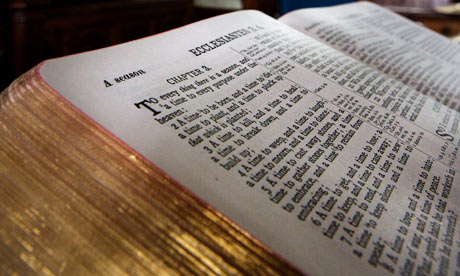
For years, whenever I heard this song, I thought it was strange that the chorus never even mentioned that Jesus rose from the dead. It just ends at "he walked on the road and died on the cross, and that was the end of the beginning." I mean, if I want to be cynical, it's probably just so the unknowing man can ask how something like the end of the beginning matters, because Jesus is dead. But if I don't look at it that way, I find something else. This song categorizes two parts of a story: there's from the beginning of the Bible all the way up to Jesus's death. Jesus's death is the end of that part, the beginning of another.
I've always seen the Bible separated into two parts, too: the Old Testament and the New Testament. But with this new categorization, you see things in a totally different light. Jesus's death ended humans having to sacrifice things for forgiveness. It ended only Hebrews being able to be saved. Jesus's death started a new beginning: everyone can be forgiven and saved. But how strange, and perhaps how beautiful, it is to think that you, right now at this very second, are part of the same story where Jesus rose from the dead. It's as if although the Bible stopped being written, the story of the human race and their relationship with God goes on. Because Jesus died on the cross, and then rose in victory, we are included in the salvation he brought. We're still living in that miraculous story.
Subscribe to:
Posts (Atom)